How a marketing agency rebuilt its pricing model and doubled gross margin
The agency could keep selling, but growth was adding delivery and management costs that its pricing did not fully cover. Beankeeper, led by Kevin, built the financial model and strengthened the reporting, controls, and cash processes behind the business.
Client Snapshot
Industry: Marketing agency
Size: Eight-figures in Annual Recurring Revenue (ARR)
Challenge: Strong sales without adequate profitability or cash reserves
Services used: Fractional CFO, financial planning and analysis, and Controller support
Key Takeaways
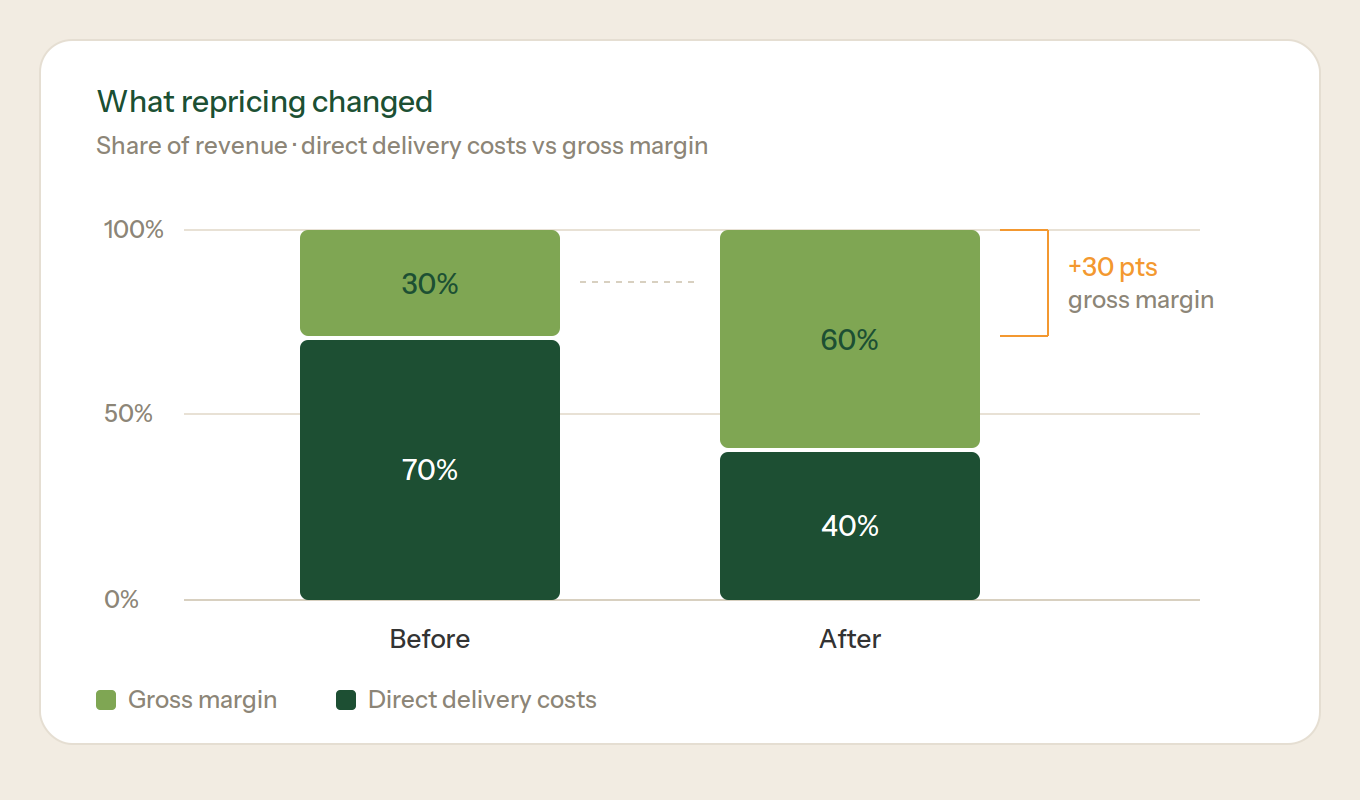
Gross margin: From approximately 30% to as high as 60%
EBITDA margin: From negative to 20%
Cash reserves: From under $80,000 to a seven-figure balance
What wasn't working
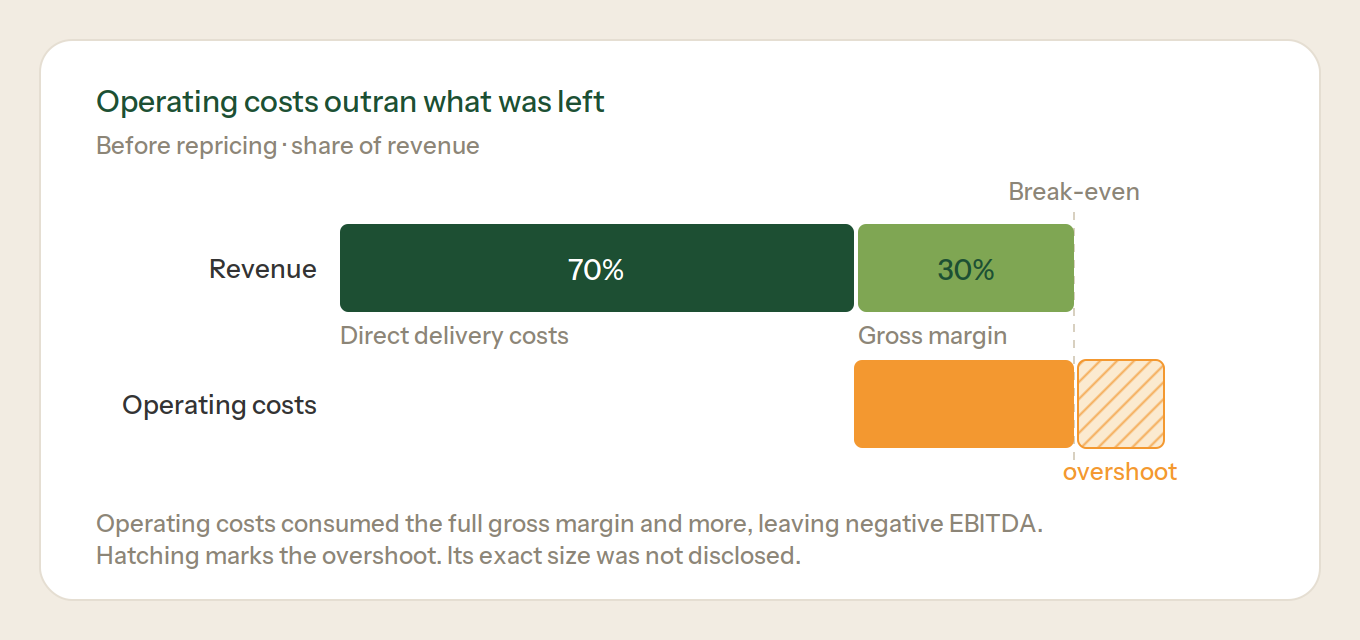
The agency had no shortage of new business. The problem was what happened after each deal closed.
Its pricing accounted for several direct costs required to deliver client work. It did not fully account for the management, review, sales, administrative, and broader operating costs that had increased as the company grew.
Revenue continued to come in, but the additional work was not producing a healthier financial result. EBITDA was negative, and the company held roughly $80,000 in cash reserves despite the scale of its operations.
Before changing its pricing approach, leadership needed to understand why sales growth was putting more pressure on profit and cash. It also needed a financial model that showed what the agency’s existing economics could support.
What Beankeeper changed
Kevin assembled and led the finance team supporting the engagement. The work combined Fractional CFO, FP&A, and Controller responsibilities, connecting pricing analysis with the reporting, controls, and financial operations needed to support the business.
A financial model for the pricing decision
Kevin began with the profit-and-loss statement and a detailed review of the agency’s cost structure.
The analysis showed that the agency’s prices reflected direct delivery costs without fully capturing the wider cost of managing and supporting the work. The team built a financial model that connected pricing to gross margin, EBITDA, and cash.
Leadership could then see the financial pressure created by the existing pricing structure and evaluate what needed to change. The agency revised its pricing approach and began pursuing higher-value engagements.
Department-level reporting for better visibility
The finance team built profit-and-loss reporting by department.
This gave leadership a more detailed view of where costs and financial performance sat across the organization. It also created a recurring way to evaluate whether pricing and operating changes were improving the business’s underlying economics.
Stronger controls and cash collection
The team introduced bill-approval controls and clearer financial workflows. It also implemented automated ACH and credit-card billing.
For customers outside the automated billing process, the agency established an upfront-deposit requirement. These changes helped the agency collect cash sooner and build a stronger operating reserve.
The results
Gross margin approximately doubled
Gross margin increased from approximately 30% to as high as 60%, a 30-percentage-point improvement.
EBITDA moved from negative to approximately 20%
The agency moved from negative EBITDA to an EBITDA margin of approximately 20% during the engagement.
Cash reserves reached seven figures
Cash reserves grew from roughly $80,000 to a seven-figure balance.
The improvement followed several connected changes. Leadership revised pricing, pursued higher-value work, strengthened billing terms, and used the reporting, controls, and financial models developed by Kevin and the team. No single change explains the full result.
The business impact
Leadership could distinguish revenue growth from profitable growth
The agency could evaluate new work against the full cost of delivering, managing, and supporting it rather than judging success by sales volume alone.
Financial performance became easier to understand
Department-level reporting showed leadership where costs and performance sat across the organization and which areas required attention.
Finance became a coordinated function with defined ownership
Kevin and the finance team managed modeling, reporting, controls, billing, and cash processes together, reducing the need for leadership to coordinate those responsibilities separately.
The stronger margin and cash position also gave the agency more room to manage periods of lower revenue and evaluate what level of growth the business could support.
Services used
Fractional CFO support
Financial interpretation, pricing strategy, and guidance for leadership decisions.
Financial planning and analysis
Financial modeling, margin analysis, and department-level reporting.
Controller support
Approval controls, billing processes, cash-management procedures, and recurring financial operations.
Is growth exposing a
pricing or profitability problem?
An agency can keep closing business while its margins and cash position move in the wrong direction.
Beankeeper helps agency leaders understand the full economics behind their growth and build the financial support needed to address what the numbers reveal.