How a marketing agency protected payroll after a forecast exposed a near-term shortfall
After reducing its internal finance team without a complete transition, a marketing agency lacked reliable financial information and a dependable view of future cash. Beankeeper identified a possible payroll shortfall, helped leadership respond, and strengthened the collections and billing processes affecting when cash entered the business.
Client Snapshot
Industry: Marketing agency
Challenge: Reduced finance capacity, unreliable financial information, slow collections, and expected client cancellations created a near-term cash risk
Services used: Financial planning and analysis, Fractional CFO support, and Controller support
Key Takeaways
Payroll: Made on time after a projected shortfall was identified about three weeks in advance
EBITDA margin: Improved from negative 12% to positive 15% over six months
Days sales outstanding: Reduced from 48 days to 32 days in approximately nine months
What wasn't working
The agency had undergone a major finance-team transition without a complete handoff. The remaining internal finance capacity could not cover the full function, leaving leadership uncertain whether the available numbers were accurate enough to guide decisions.
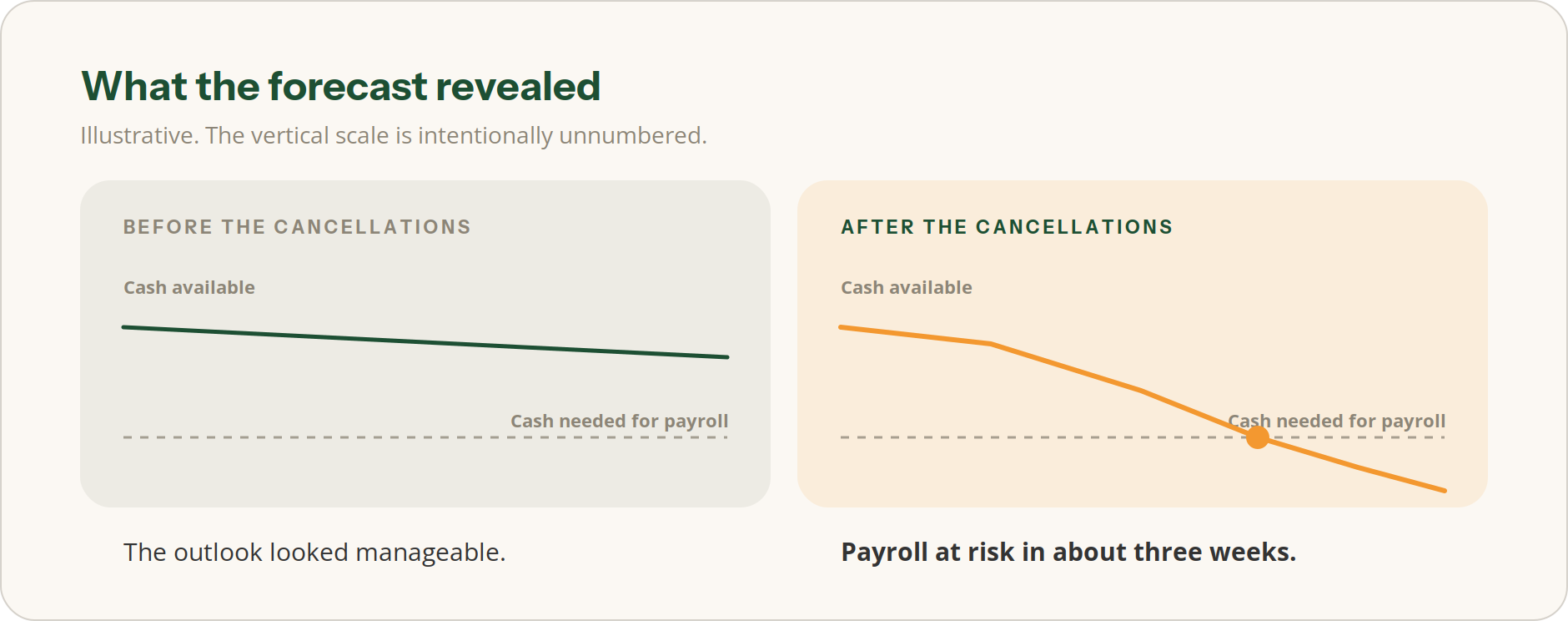
Earlier cost reductions made the outlook appear manageable. That changed when expected client cancellations were incorporated into a forward forecast. The updated projection showed that the business could face a payroll shortfall unless leadership acted within approximately three weeks.
The pressure also extended into recurring finance operations. Client payments were arriving too slowly, and some fees were collected after services had already been delivered. The agency continued carrying payroll, vendor, and delivery costs while waiting for the related client cash.
What Beankeeper changed
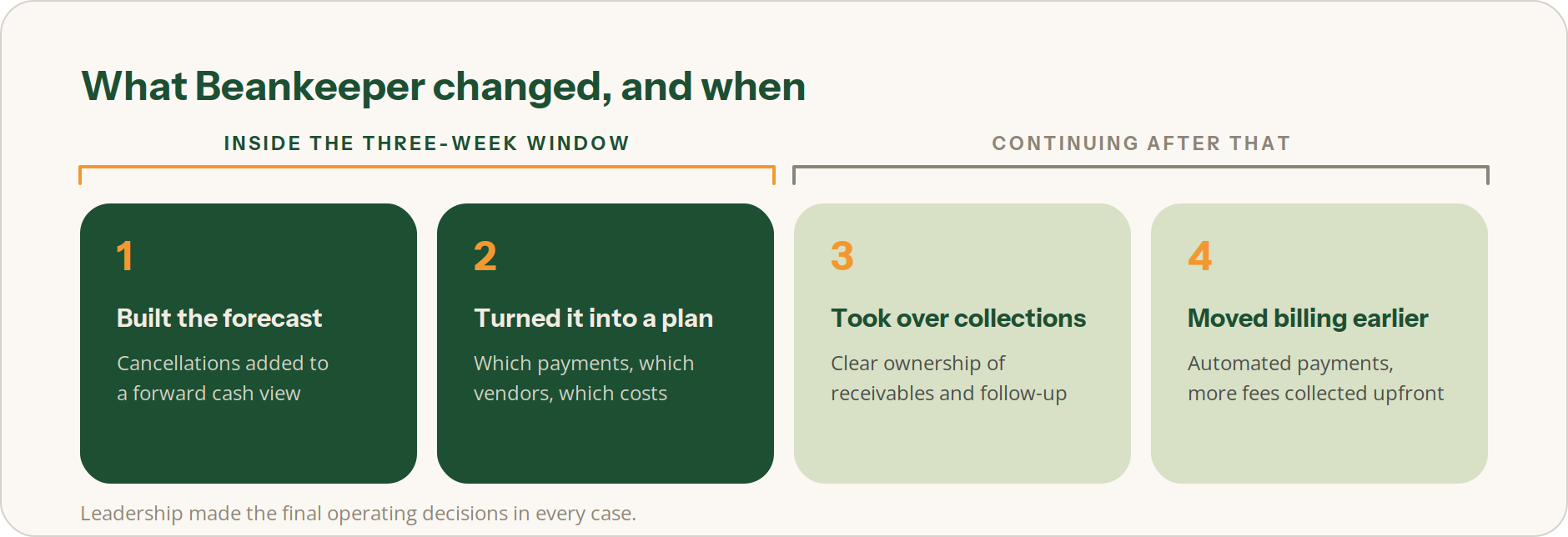
Built a forward forecast around expected cancellations
Beankeeper incorporated the known client cancellations into a cash forecast and mapped their effect on available cash, operating costs, and payroll.
The forecast showed when the expected revenue change could affect the company’s ability to meet its obligations. Leadership gained a defined window in which to respond before payroll was due.
Converted the forecast into a near-term cash plan
The team helped leadership determine which payments required immediate attention, which vendor commitments could be renegotiated, and where costs needed to change.
Selected vendor commitments were renegotiated, and non-urgent costs were reduced within the available window. Leadership made the final operating decisions using the forecast and financial guidance Beankeeper provided.
Gave accounts receivable clearer ownership
The cash forecast also exposed a broader collections problem. Beankeeper took responsibility for accounts receivable management and consistent follow-up on outstanding client payments.
The team tracked days sales outstanding, or DSO, which measures how long it takes a business to collect outstanding invoices. DSO was 48 days when the engagement began.
Controller support created a more consistent process for managing receivables, following up on collections, and monitoring whether client payments were reaching the business sooner.
Moved billing earlier in the service cycle
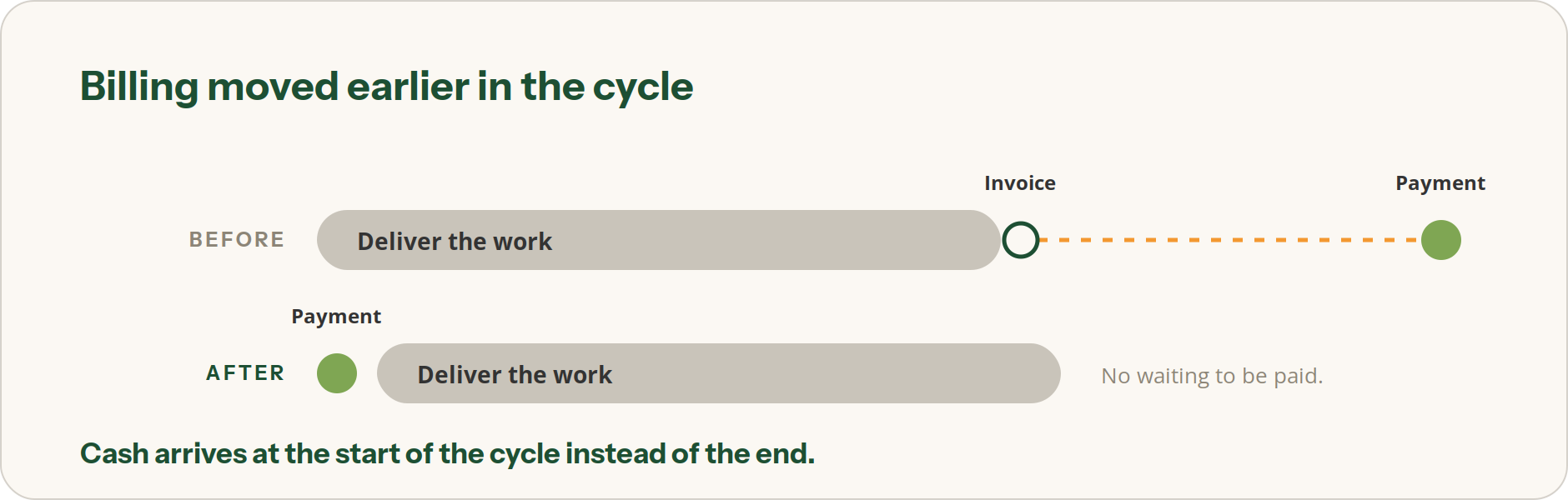
Beankeeper also changed the agency’s billing process. The company moved to automated payment processing and began collecting more client fees upfront rather than waiting until the end of the service period.
The change brought cash into the business earlier in the billing cycle. The agency no longer had to fund as much client delivery before receiving the related payment, reducing working-capital pressure.
The results
The agency made payroll
The forecast identified the possible shortfall about three weeks before payroll was due. That gave leadership time to renegotiate vendor commitments, reduce costs, and determine how to allocate the cash available.
After leadership acted on the forecast, the agency made payroll on time.
EBITDA margin moved from negative to positive
EBITDA margin improved from negative 12% to positive 15% over six months.
The improvement followed cost reductions, cash planning, stronger collections, and changes to when client fees were billed and collected. Beankeeper’s forecasts, financial guidance, and recurring finance support contributed to the change.
Client invoices converted into cash sooner
Days sales outstanding declined from 48 to 32 days over about nine months.
Beankeeper’s accounts receivable management, collections follow-up, automated payment process, and earlier billing contributed to the improvement.
The business impact
Leadership could see how expected client cancellations would affect payroll before payments became due, giving the agency time to adjust costs and commitments. The forecast became an operating tool that shaped decisions before the cash pressure became urgent.
Beankeeper then connected that forward view to the recurring finance work affecting cash. Receivables had defined ownership, billing moved earlier in the service cycle, and leadership had financial support that connected the numbers to what needed to happen next.
By the end of the first year, senior leadership described finance as the one area of the business it no longer needed to worry about.
Services used
Financial planning and analysis
Beankeeper built the forward forecast that incorporated expected client cancellations and showed how the change could affect available cash and payroll.
Fractional CFO support
Beankeeper interpreted the forecast, led the cash planning, and helped leadership evaluate decisions involving costs, vendor commitments, and near-term financial priorities.
Controller support
Beankeeper managed accounts receivable, followed up on collections, monitored DSO, and helped move billing and payment collection earlier in the service cycle.
Would your forecast show a payroll risk before it becomes urgent?
Beankeeper connects cash forecasting with the collections and billing work behind it, giving leadership the time and financial context to respond.
Request a Call